
Many firms have asked those joining on April 1 to delay their on-boarding by 2-3 months. The outlook for the airline, tourism, hotel, and media industries is bleak too.

The combined market capitalisation of the top 873 family-owned companies was down 26.3 per cent year-on-year (YoY) to Rs 61.8 trillion at the end of trading on Tuesday. It had grown 6 per cent in FY19 and nearly 20 per cent in FY18.
Some of the top indebted companies likely to face financial headwinds in the coming quarters include NTPC, PowerGrid, Tata Steel, Adani Power, JSW Steel, UPL, and Steel Authority of India. Together these 201 companies owed Rs 14.9 trillion to their lenders at the end of September 30, 2019, up 4.1 per cent year-on-year (YoY) during the first half of FY20.

In the manufacturing sector, output is expected to decline by about 70 per cent as only food-processing, and drugs and pharma industries are allowed to operate while other segments, such as engineering and metals, have shut operations.

Indian companies will have to repay overseas debt worth $7.5 billion in the June quarter.

To sell off L&T IDPL, Nabha Power; transfer Hyderabad Metro to an InvIT.

Apart from the Adani group, the Tata group, the Hinduja group, Indigo and a New York-based fund, Interups, are expected to submit EoIs.

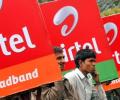
Vodafone Idea, which reported a loss of Rs 6,439 crore in the December quarter, said it had received letters from the department of telecommunications (DoT) directing immediate payment of dues amounting to Rs 54,000 crores after the SC judgment. "The company is currently assessing the amount that it will be able to pay to DoT towards the dues calculated based on AGR, as interpreted by the Supreme Court in its order dated October 24, 2019. The company proposes to pay the amount so assessed in the next few days," it stated.

Vodafone Idea's net worth (or shareholders' equity) was down 73 per cent year-on-year to around Rs 17,600 crore at the end of the December 2019 quarter after the company reported a net loss of around Rs 6,400 crore during the quarter. Cumulatively, the company has lost nearly Rs 45,000 crore in the last four quarters, eroding its net worth to its lowest level in three-year. Analysts said a such a low level of net worth, coupled with continuing losses in operations, ruled out the possibility of the company getting fresh loans from lenders to fund its adjusted gross revenue (AGR) dues of Rs 54,000 crore.

The increased tax target comes at a time when consumer spending and sales growth are slowing down and most companies are not investing in new capacities.

UV Asset Reconstruction Company Ltd has made the highest bid of Rs 16,000 crore to buy Anil Ambani group's Reliance Communications and Reliance Telecom, which are in the National Company Law Tribunal (NCLT). Last year it was the highest bidder for taking over Aircel's assets for an upfront payment of Rs 150 crore. Surajeet Das Gupta and Dev Chatterjee dig deeper to find out more about this little known company.

The Indian rupee is down nearly 2 per cent against the US dollar since the beginning of January 2019. Experts attribute the Indian rupee's relatively poor performance to a sharper-than-expected fall in economic growth in India.
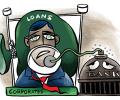
Bankers said they are looking outside the bankruptcy courts and will be able to resolve a few debts in the power sector before January-end.

The country's top FMCG stocks, such as Hindustan Unilever, ITC, Nestl, Britannia, Godrej Consumer Products, and Dabur, among others, are currently trading at around 41x their trailing 12-month earnings, down from their peak P/E multiple of around 48x at the end of December 2018.

'While the march of globalisation is perhaps inevitable, what is certain is that the world is no longer flat as, the emerging pattern of trade is more regional. 'This new trend of 'slowbalisation' raises some questions that challenge conventional wisdom on how businesses should distribute their capacities,' Birla said.

This is the biggest equity-raising exercise by an Indian corporate within a financial year. The fundraising - led by Citibank, Goldman, Kotak and Axis Capital as bankers - will see participation by foreign and domestic institutional investors.

Richest 10 account for 41% of promoter wealth, up from 33% in December 2018, says Krishna Kant.

The Sensex is on course to ending calendar year (CY) 2019 at a price-earnings (P/E) multiple of 29x, the highest in 25 years. Current valuations are, however, lower than those seen in the early 1990s. The Sensex has risen close to 14 per cent in the last 12 months, while the index underlying EPS dropped 6.7 per cent during the period.

SBI and other public sector banks have decided to lend Rs 4,000 crore to Patanjali Ayurved for the acquisition of Ruchi Soya, which was facing bankruptcy proceedings under the Insolvency and Bankruptcy Code. The money lent by banks will help the PSBs to settle their exposure to Ruchi Soya with a haircut of 65 per cent. Banks led by SBI and others had earlier made claims of over Rs 12,146 crore against Ruchi Soya after the company failed to repay its loans.
The company has a valuation of Rs 2.22 trillion, up from Rs 1.33 trillion a year ago.
 © 2026 Rediff.com - Investor Information - Advertise with us - Disclaimer - Privacy Policy - Sitemap - Feedback - About us - Terms of use - Grievances